In the relentless march of technological progress, where today’s flagship becomes tomorrow’s bargain, there exists a fascinating niche for the classics. This is a tale of two machines separated by nearly a decade and a half: the venerable CLEVO P170 P170HM, a legendary notebook barebone from a bygone era, and a archetypal mainstream gaming laptop of 2025. This is not merely a spec sheet comparison—a contest the old warrior would conclusively lose—but an exploration of philosophy, experience, and what we’ve gained and sacrificed in the name of advancement.
The Unapologetic Heft vs. The Refined Compact
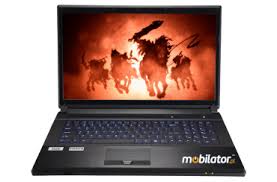
The moment you handle them, the divide is visceral. The CLEVO P170 P170HM is a statement piece in sheer physical presence. Constructed like a tank, its 17.3-inch frame carries a weight of around 3.9kg, a testament to an era where robustness and internal expansiveness were paramount. It demands a dedicated space on a desk and a considerate approach to portability. In stark contrast, a 2025 contender like the Lenovo Legion Y7000 exemplifies the modern ethos, having shed significant weight to around 2kg for vastly improved portability. The contemporary machine is designed for mobility, slipping into backpacks with ease, while the P170HM was built as a desktop replacement in the truest sense, a portable powerhouse that prioritized stability and upgradeability over frequent travel.
A Window to the Past: Screen and Sensory Engagement
Engaging with the CLEVO P170 P170HM is a lesson in context. Its native 1920×1080 display was once the pinnacle for gaming laptops. Today, it stands against the dazzling norm of 2025: 2.5K (2560×1440) or higher resolutions, refresh rates soaring to 180Hz or 240Hz for buttery-smooth motion, and wide colour gamuts covering 100% of DCI-P3 for vivid, accurate hues. The modern screen is undeniably superior, a portal to incredible visual fidelity. However, the P170HM’s interface is one of tangible control. Its full-sized keyboard, generous key travel, and an array of direct ports offer a tactile, immediate connection largely absent from today’s thinner profiles, where keyboards can feel shallow and ports are often reduced to a handful of universal USB-C slots.
The Roar of Cooling and the Pragmatism of Power
This is where the experiential gap shouts loudest. Under load, the thermal solution of the CLEVO P170 P170HM was designed for efficacy, not elegance. Its fans can spin up to a noticeable roar to manage the heat from power-hungry, older-generation components. Modern laptops, like the ASUS TUF Gaming A16, employ advanced vapour chambers and sophisticated fan curves to balance performance and acoustics, though even they can become quite loud under stress. The CLEVO P170 P170HM’s approach is brutally straightforward. The most profound difference lies in power philosophy. The modern laptop is a marvel of efficiency, with components like the RTX 5060 GPU delivering strong performance while managing power draw, often allowing for several hours of unplugged use for light tasks. The P170HM, with its power-guzzling desktop-replacement heritage, has always been shackled to the wall outlet, its bulky power brick an inseparable companion. Endurance was never its virtue; raw, upgradable power was.
The Throne of Customisation: Expansion and Longevity
Here, the CLEVO P170 P170HM reclaims the crown decisively. It is the embodiment of the “barebone” concept. Its heart was designed to be swapped out: the CPU was socketed, not soldered, and the GPU used the upgradable MXM 3.0 Type B standard. Users could access and replace RAM, storage, the wireless card, and even the cooling system with relative ease. This machine was built not just to be used, but to be evolved. The modern 2025 gaming laptop, in its quest for thinness, largely abandons this ethos. While some models retain one or two accessible slots for RAM and storage upgrades, the core components—CPU and GPU—are permanently affixed to the motherboard. Your day-one configuration is essentially your final one. The P170HM represents a philosophy of user ownership and long-term adaptability that has become a rare luxury.
A Value Proposition for the Connoisseur
So, where does the CLEVO P170 P170HM stand in 2025? It is emphatically not a recommendation for the mainstream user seeking a primary machine for the latest games. Its value is niche and profound. For the hardware enthusiast, the retro computing fan, or the tinkerer, it is a fascinating platform. It serves as a hands-on lesson in PC hardware history, a customizable project for breathing new life into old tech, or a dedicated machine for running classic games and software in their native environment. Acquiring one today is an exercise in community sourcing, often found through specialist forums or pre-owned markets. Its worth is measured not in frames per second, but in the joy of restoration, the satisfaction of a custom build, and the ownership of a piece of computing heritage. In a world of sealed, disposable electronics, the P170HM stands as a monument to a more open, user-repairable, and enduring ideal.