Prologue: When Your Most Important Tool Becomes Your Greatest Limitation
Imagine this: you’re on a bustling factory floor, the air humming with the sound of machinery. Or perhaps you’re at a remote wind farm, with the elements swirling around you. Your mission is critical—programming a PLC, diagnosing a network fault, or commissioning a new automation line. Your lifeline in this demanding environment is the Siemens Simatic Field PG M3, the so-called “ruggedised” mobile workstation engineered for industrial fieldwork. It promises to be the bridge between your expertise and the machine’s logic. But here’s the unsettling question everyone in the field eventually faces: what happens when the very device you rely on to solve problems starts creating them of its own? The confusing array of technical specs, the hidden compromises in performance, and the daunting reality of sustaining laptop power in harsh conditions can turn a purchasing decision into a minefield. By the end of this deep dive, you will have a crystal-clear, unbiased understanding of the Simatic Field PG M3’s true capabilities and constraints, arming you with the knowledge to decide if this industrial workhorse is the right partner for your toughest jobs.
Beyond the Badge: Deconstructing the Industrial Facade
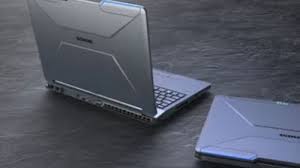
At first glance, the Siemens Simatic Field PG M3 is a statement of intent. It’s not designed for coffee shops; it’s built for control cabinets and plant floors. Its chassis, often a magnesium alloy or reinforced plastic composite, feels like it can take a knock. The ports are covered, the screen is matte to combat glare, and it carries an air of unshakeable reliability. Siemens positions it not merely as a laptop but as an integrated engineering tool, often pre-loaded with the full TIA Portal suite. Yet, in an era where digital commerce is driven by super-personalised experiences and immersive visual commerce , evaluating such a specialised device based on manufacturer claims alone is a perilous path. The true test lies beneath the surface, in the synergy—or friction—between its hardened exterior and the commercial-grade computing components within.
The Core Conundrum: Performance Hardware in a Rugged Shell
The heart of any field programming device is its core hardware. The Simatic Field PG M3 typically houses processors from Intel’s professional-grade mobile series, paired with ample ECC (Error-Correcting Code) memory—a vital feature for data integrity in critical processes. Storage often consists of solid-state drives, prized for their shock resistance over traditional hard disks. However, the critical specification many overlook is not the model number of the CPU, but its thermal design power (TDP) and how the chassis manages it. A high-performance processor is meaningless if the cooling solution cannot sustain its speeds during a prolonged compilation or simulation. This becomes a pivotal point of evaluation: does the design prioritise absolute silence or sustained performance? The compromise often reveals itself during real-world, multi-hour tasks.
Display and Graphics: The Window to Your Work
For engineers, the screen is a canvas. The M3’s display prioritises readability over cinematic splendour. Expect full HD resolutions, high brightness levels for outdoor use, and exceptional horizontal and vertical viewing angles—essential when you’re huddled around the device with colleagues. The integrated graphics, often from Intel’s professional line, are more than capable of driving the desktop environment, 2D CAD drawings, and the visualisations within TIA Portal. Don’t expect to render complex 3D models or enjoy high-refresh-rate gaming; this is a tool calibrated for precision and clarity, not entertainment. In a trend where consumers demand high-resolution and 360-degree product interactions , the M3’s display philosophy is refreshingly single-minded: it must show your engineering truth without distortion or lag.
The Mobility Paradox: Weight, Endurance, and the Power Realities
Portability in an industrial context has two sides: physical heft and battery stamina. The M3 is undoubtedly heavier than a consumer ultrabook—that’s the price of robustness. The more significant challenge is long-lasting field laptop battery replacement and management. The original high-capacity 89Wh Siemens battery is designed for long shifts away from the mains. However, as battery chemistry ages, the quest for a reliable original SP306-2 battery substitute becomes a common headache for users. This directly impacts total cost of ownership. A device’s true “portability” is measured in years, not just hours on a single charge, and hinges on access to trustworthy portable power solution for Siemens PG devices and spare parts. This underscores a broader shift in commerce, where seamless logistics and reliable supply chains are paramount for customer satisfaction .
Software, Experience, and the Ecosystem Lock-in
The Simatic Field PG M3 shines in its system integration. Running a Windows professional operating system, it is meticulously configured for stability with Siemens’ own software stack. Drivers are certified, and conflicts are minimised—a huge benefit over self-assembled rugged laptops. The experience is streamlined for the professional user, reducing setup time and technical hiccups. However, this seamless experience comes with an implicit trade-off: flexibility. You are buying into the Siemens ecosystem. This mirrors a larger trend where AI-assisted product discovery is helping professionals find the right tool for the job, not just a generic device. The M3 is a definitive answer to a specific set of problems, not a jack-of-all-trades.
The Hard Data: Putting the Industrial Workhorse Through Its Paces
Benchmarking a device like the Simatic Field PG M3 requires a different lens. Raw speed is secondary to consistency, stability, and thermal management under duress.
Core Computational Fortitude
Synthetic benchmarks like Cinebench reveal the CPU’s character. The multi-core score indicates how well it handles parallel tasks—simulating complex logic or running virtual machines. The single-core score affects everyday responsiveness. The key metric to watch is performance consistency between runs. A significant drop suggests thermal throttling, where the CPU slows down to protect itself. In a well-designed industrial chassis, you’d expect minimal throttling, even if the absolute clock speeds are conservative. Memory bandwidth and low latency are crucial for swiftly loading large project files and are generally well-served by the professional chipset.
Graphical Throughput and Real-World Utility
Graphical tests like 3DMark Time Spy or the SPECviewperf benchmark (for professional graphics) provide a baseline. However, the most telling test is within the native environment: how smooth is the zoom and pan in a large-scale Siemens TIA Portal project with hundreds of elements? Frame rate consistency (1% lows) here is more important than peak FPS. Similarly, rendering a complex HMI screen should feel instantaneous. The M3’s GPU is tuned for this exact workload, often outperforming consumer-grade cards with higher raw power but less optimised drivers.
Storage Speed: The Silent Productivity Booster
Sequential read/write speeds (measured in MB/s) determine how quickly you can load the operating system or copy massive project archives. The random read/write speed (measured in IOPS) is arguably more critical—it dictates how snappy the system feels when opening applications, searching through tag databases, or compiling code. A high-quality NVMe SSD delivers here, making the entire workflow feel fluid. This is a tangible upgrade that significantly enhances daily user experience.
The Crucible of Cooling and Acoustic Signature
The ultimate stress test is a combined CPU and GPU load (“double roasting”). The temperatures of both components should plateau below 95°C to ensure long-term component health. Crucially, the clock speeds and power draw should form a stable plateau, not a jagged line of constant throttling and boosting. The fan noise during this state is also a factor. A noticeable but steady hum is acceptable on a factory floor; a high-pitched, erratic whir is not. The M3’s cooling is typically designed for this sustained, moderate noise profile rather than silent operation.
The Uncompromising Tool for a Defined World
The Siemens Simatic Field PG M3 leaves a distinct impression. It is not the fastest, lightest, or flashiest mobile computer on the market. It is, however, a phenomenally coherent and purpose-built instrument. Its value lies in its certified stability, industrial durability, and out-of-the-box readiness for the Siemens automation universe. The performance is consistent and ample for its intended duties, with thermals and acoustics managed for professional environments.
Who is This For?
This device is unequivocally perfect for:
- Industrial Automation Engineers & Technicians: Who spend days on-site commissioning, maintaining, or troubleshooting Siemens-based systems.
- System Integrators: Who require a reliable, pre-validated mobile workstation to deploy across various client sites.
- Critical Infrastructure Maintainers: In sectors like energy, water, or transportation, where device failure is not an option.
Who Should Look Elsewhere?
Conversely, you might reconsider if:
- Your work involves heavy 3D rendering, simulation beyond PLC logic, or data science.
- Your primary need is for a general-purpose laptop that occasionally visits a plant floor.
- You operate in a multi-vendor environment and require frequent use of non-Siemens engineering software with high graphical demands.
- You are highly sensitive to initial device cost and are not factoring in total cost of ownership and downtime avoidance.
The Siemens Simatic Field PG M3 masterfully solves the core dilemma of field engineering: providing dependable, integrated computing power where it’s needed most. Its potential weaknesses—ecosystem specificity and the eventual need for a Siemens Simatic battery upgrade options—are simply the inverse of its greatest strengths: focus and reliability. In a world of generic gadgets, it remains a specialised scalpel. For the professional whose office is the factory floor, it isn’t just a purchase; it’s an investment in certainty.