Automated External Defibrillators (AEDs) are the unsung heroes of community safety, with the UK Government committing significant funds to improve public access to these life-saving devices across England. However, a defibrillator is only as effective as its power source. The battery is the silent guardian that ensures the device is ready to analyse, advise, and act when a cardiac emergency occurs.
Recent data from the Resuscitation Council UK reveals a stark reality: fewer than one in twelve patients (7.8%) survive an out-of-hospital cardiac arrest in England. Among the many factors influencing this statistic, the availability of a fully functional AED is critical. Central to this functionality is the Philips HeartStart FRx AED’s lithium manganese dioxide battery. Understanding how to properly care for it—and separating fact from fiction—can be the difference between a device that saves a life and one that simply watches from the wall.
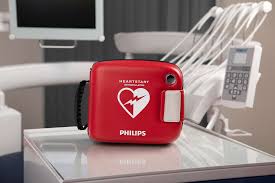
Practical Tips to Extend Your Philips HeartStart FRx AED Battery Life
As a device designed for rigorous professional use in hospitals, fire stations, and industrial sites, the Philips HeartStart FRx AED is built to withstand harsh conditions. However, even the most rugged equipment benefits from intelligent care. Here are five actionable strategies to ensure its battery remains rescue-ready.
1. Perform Regular, Scheduled Checks
Reliability is not a one-time setup; it is an ongoing process. The Philips HeartStart FRx AED is equipped with daily, weekly, and monthly automatic self-tests that comprehensively check the battery’s capacity and the electrode pads’ status. It is essential to make it a weekly habit to visually confirm that the device’s status indicator is functioning normally. If the indicator signals a problem, or if you hear any unexpected beeping, consult the unit’s display immediately to diagnose the issue. This proactive habit prevents a small electrical quirk from becoming a total system failure when every second counts.
2. Adhere Strictly to Replacement Timelines
Time is the most insidious threat to an AED battery. The long-life battery for the Philips HeartStart FRx AED is designed for a standby life of approximately four years once it has been inserted into the device. It is crucial to understand that this four-year period is a hard guideline. Replace the battery as soon as it reaches this milestone, regardless of whether it appears to be functioning. Unlike a torch battery that dims slowly, an AED battery can decline in a way that is not always externally obvious until it is too late. Mark the installation date on your calendar and plan for a replacement before the fourth year arrives.
3. Mind the Environment: Storage and Temperature Control
While the Philips HeartStart FRx AED is famously rugged—resistant to dust, water jets, and significant impact—its battery has specific environmental preferences. The ideal habitat for maximising battery lifespan is a cool, dry environment. Extreme temperatures, both hot and cold, can accelerate the chemical reactions inside the lithium cells, gradually depleting their capacity. In a UK setting, this means avoiding placement next to radiators, in direct sunlight, or in uninsulated outdoor cabinets that might freeze in winter. A stable, room-temperature indoor location is best, allowing the powerful self-testing features to run without the added stress of thermal extremes.
4. Utilise the “Install-By” Date, Not Just the “Use-By” Date
A common oversight is focusing only on the battery’s expiration date. The long-life battery has a shelf life of at least five years from its manufacture date before it is even inserted into the AED. However, the Philips HeartStart FRx AED manual emphasises the “Install-By” date. If you install a battery after this date has passed, the four-year standby life is no longer guaranteed and could be significantly shorter. When you purchase a replacement battery, always check that the “Install-By” date is well into the future to ensure you are getting the full four years of service.
5. Register Your Device and Leverage UK Support Systems
In the UK, you are not alone in this maintenance journey. The national defibrillator network, known as “The Circuit,” is a powerful tool for AED guardians. Registering your Philips HeartStart FRx AED on The Circuit enables the system to send you automatic reminders when your battery or electrode pads are due to expire. These timely notifications remove the guesswork and ensure you are alerted well in advance of a critical failure. Embracing this digital support network transforms battery maintenance from a chore into a simple, automated process that integrates directly with the UK’s emergency response infrastructure.
Common Myths About Your AED’s Battery
Misinformation can be just as dangerous as a dead battery. Let’s clear up some persistent misconceptions that often lead to costly or dangerous errors.
This is arguably the most common and dangerous myth. The green status light on many AEDs, including the Philips HeartStart FRx AED, indicates that the device has passed its most recent self-test. However, a self-test is a snapshot in time; it cannot predict a sudden.Therefore, the biggest misconception is that a green light indicates a good battery condition.
Philips HeartStart FRx AED – Battery M5070A 4200mAh
Buy Philips Medical Battery online on Batteriesglobal.co.uk United Kingdom | Large selection of Philips Batteries | Enjoy best prices | Order now!
Our brand-new Medical Battery compatible with Philips M5070A is engineered to deliver long-lasting and stable performance. It is designed to meet rigorous standards, ensuring full compatibility with devices such as the Philips HeartStart FRx AED. This battery comes with a one-year warranty and has passed essential safety certifications including CE, RoHS, and ISO9001. Choose our Philips M5070A battery for a power solution that combines quality, safety, and convenience. Invest in authentic performance and keep your Philips HeartStart FRx AED running like new.