Don’t let a dead battery be the reason your critical field test comes to a sudden, expensive halt.
Imagine this: you’re on a cell tower at dusk, finalizing measurements with your Anritsu Spectrum Analyzer or Vector Network Analyzer. Suddenly, the low-battery warning flashes, and within minutes, your $50,000 piece of equipment becomes a paperweight. Missed deadlines, costly remobilization, and damaged credibility—all because of a battery you thought was “good enough.”
If you rely on Anritsu equipment like the MS2720T, S331E, or MS2026C, this blog is for you. We’re cutting through the confusion of replacement batteries. By the end, you’ll know exactly how to choose a battery that guarantees reliability, maximizes uptime, and protects your valuable instrument.
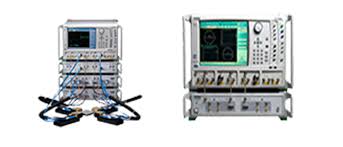
Part 1: Buying a Battery? You’re Buying Uptime and Data Integrity.
For professionals, a battery isn’t just a component; it’s your foundation of field operability. The right Anritsu 633-75 AQ7280 isn’t merely about power—it’s about ensuring your analyzer performs as the precision instrument it was designed to be.
Decoding the Specs: What Matters for Your Anritsu Gear
Let’s break down the key specifications of a high-performance replacement like the Anritsu 633-75 AQ7280:
| Specification | What It Is | Why It Matters for You |
|---|---|---|
| Voltage (10.8V / 11.1V) | The electrical “pressure” supplied to your device. | Must match your analyzer’s design precisely. Too low causes malfunctions; too high can cause permanent damage. |
| Capacity (7500mAh – 8000mAh) | The total “fuel” in the tank, measured in milliamp-hours. | Directly translates to more field runtime. The Anritsu 633-75 offers high capacity for longer shifts without recharge. |
| Chemistry (Li-Ion) | The technology inside the battery cell. | Modern Li-Ion offers the best balance of energy density, weight, and recharge cycles for professional tools. |
| Certifications (CE, RoHS) | Safety and environmental compliance marks. | Your guarantee that the battery meets strict international standards for safety and is free from hazardous substances—non-negotiable for safe operation. |
The Direct Comparison: Generic vs. Precision-Engineered
Not all “compatible” batteries are created equal. Here’s the real difference:
| Feature | Generic “Fits” Anritsu Battery | High-Quality Anritsu 633-75 AQ7280 Replacement |
|---|---|---|
| Cell Quality | Unknown grade; often reclaimed or B-grade cells. | Uses high-quality, grade A battery cells for true capacity and longevity. |
| Protection Circuit | Basic or poorly calibrated, risking overcharge/over-discharge. | Advanced circuitry that meets all technical requirements for reliability and security, mirroring OEM design. |
| Fit & Form | May be loose, require shims, or have poorly aligned connectors. | Precision-engineered to slide seamlessly into your analyzer’s bay for a secure, worry-free connection. |
| Long-Term Reliability | Capacity often drops sharply after a few dozen cycles. | Designed for more recharge cycles, maintaining stable performance to complete long-term projects. |
Part 2: The Hidden Costs of the Wrong Battery: Safety and Performance Pitfalls
Choosing based on price alone is the most expensive mistake you can make. Beyond simple failure, the wrong battery introduces severe risks.
The Non-Negotiables: Why “No Brand, No Certification” is a Hard Stop
- Fire and Thermal Runaway Risk: Cheap lithium-ion cells without proper internal safety mechanisms can overheat, swell, or even catch fire, especially during charging or in high-temperature field environments.
- Instrument Damage: An unstable voltage output can fry sensitive measurement circuitry. Repairing an Anritsu Vector Network Analyzer costs far more than any battery “savings.”
- Data Loss: A sudden shutdown during a critical measurement log can corrupt data files, forcing you to repeat an entire site survey.
Always look for explicit mentions of CE, FCC, and RoHS certifications. These are not just stickers; they are your first-line assurance that the product has passed basic safety and environmental tests. A quality replacement like the Anritsu SM204 (compatible with the 633-75 AQ7280) will proudly list these.
Real-World Case: The Fading Signal
A field technician used an uncertified, cheap battery in his Anritsu Cable and Antenna Analyzer (S332E). Initially, it worked. However, after a month, the battery began to discharge unpredictably. During a pivotal optimization test, it died at 40% indicated charge, missing a key data set and delaying a network launch. The cost of the delay was over 100x the price of a proper Anritsu 633-75 battery.
Part 3: Brand Showdown: Navigating Your Replacement Options
Let’s compare the main paths you can take when your original battery needs replacing.
| Brand / Option | Key Characteristics | Best For |
|---|---|---|
| Anritsu OEM (Original 633-75) | Gold standard for compatibility and guaranteed performance. Direct from the manufacturer. | Purists and large corporations where budget is secondary to absolute certainty, warranty compliance, and traceability. |
| Premium Certified Replacements (e.g., SM204 / AQ7280) | High-quality alternative. Uses Grade A cells, has full safety certifications (CE, RoHS), and often offers a 1-year warranty. Excellent balance of cost and reliability. | The Smart Professional. Most field engineers and service companies. You get OEM-level performance and safety at a more accessible price point. The Anritsu 633-75 AQ7280 fits here. |
| Budget “Compatible” Batteries | Low upfront cost. Specifications often inflated; cells and protection circuits are of questionable origin. Rarely have legitimate certifications. | Extreme short-term budgets only. A major gamble with your equipment and safety. Not recommended for mission-critical work. |
Scenario-Based Recommendations:
- “I need absolute confidence for my critical MS2038C VNA.”Go for a Premium Certified Replacement like the Anritsu 633-75 AQ7280. You get the robust performance needed for complex measurements without the OEM price premium. Ensure it lists a full compatibility with your specific model series.
- “My company’s procurement requires name-brand OEM parts.”Insist on the genuine Anritsu 633-75. It’s the only way to meet strict OEM-only policies and maintain full warranty coverage.
- “I have an older MS2712E analyzer for light duty work.”A Premium Certified Replacement is still the wise choice. It extends the life of your legacy tool reliably and safely, ensuring it’s ready when you need it.
Part 4: Your Action Plan: The 5-Step Checklist to the Perfect Battery
Stop researching and make a decision. Follow this checklist:
- Verify Your Model Number: Power down and remove your old battery. The exact part number (e.g., 633-75, SM204, AQ7280) is on the label. Cross-check it with the product description.
- Confirm Compatibility: The listing must explicitly include your analyzer model (e.g., MS2720T, S412E, MS2026C). Don’t assume.
- Inspect the “Certifications” Section: Legitimate sellers will display the CE and RoHS logos clearly. If it’s not mentioned, it’s not certified.
- Check for a Meaningful Warranty: Look for at least a 1-year warranty. This signals the manufacturer stands behind the product’s longevity.
- Purchase from a Specialized Supplier: Buy from distributors focused on test equipment or professional batteries, not general marketplaces. They understand your needs.
Your Next Step: You now have the knowledge to avoid failure. Don’t wait for a crisis. Search for “Anritsu 633-75 AQ7280 replacement battery with CE RoHS warranty” to find your reliable power solution today. Equip your analyzer with the foundation it deserves.