There is something oddly revealing about wearing a smartwatch continuously for more than a week. At first, you notice the obvious things: how comfortable it feels on your wrist, how quickly you get used to checking notifications and whether the battery lasts long enough for your routine.
After ten days with the Apple Watch Series 12, however, the novelty has started to wear off. That is when the smaller details become much more interesting.
The watch has become part of my daily routine. I check the time, glance at incoming messages, track workouts and look at my activity data without really thinking about it. But one reading keeps catching my attention because it seems just slightly off compared with what I expected.
It is not dramatic enough to make the watch unusable. In fact, most of the experience has been remarkably consistent. But it raises a bigger question about how much confidence we should place in smartwatch health tracking.
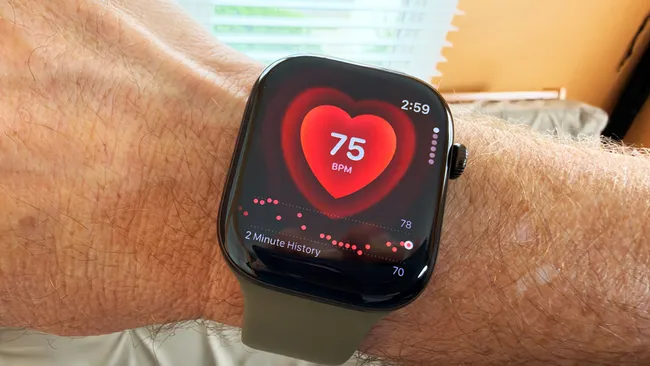
When numbers start to feel personal
The appeal of a modern smartwatch is largely built around numbers. Steps, heart rate, calories, sleep duration, exercise time and other measurements turn everyday activity into something that can be monitored.
The Apple Watch Series 12 takes this idea further by making health and fitness information easy to access throughout the day. The result is convenient, but it also creates an interesting psychological effect.
Once you see a number regularly, you start remembering it.
That means even a small change can feel significant. A slightly different resting heart rate or an unexpectedly high reading during a normal day can make you wonder whether something has changed — or whether the device has simply measured the situation differently.
This is where Apple Watch health tracking accuracy becomes more complicated than a simple question of whether the sensor is “accurate”.
Why one slightly unusual reading stands out
The reading that bothered me was not wildly outside expectations. That is precisely why it was difficult to ignore.
If a smartwatch suddenly produced an obviously impossible result, the explanation would be straightforward: the sensor had probably lost contact with the skin, the watch had moved or something else had interfered with the measurement.
A reading that is only slightly different is much harder to interpret.
During ten days of normal use, there are countless variables. The watch can sit differently on the wrist, the strap can be tighter or looser, skin temperature can change and movement can affect optical sensors.
Even the activity itself matters. A measurement taken while sitting quietly is not necessarily comparable with one recorded after walking up a hill or rushing for a train.
That is an important point for anyone interested in Apple Watch Series 12 health features. A smartwatch reading should generally be viewed as data collected under particular circumstances rather than an absolute measurement detached from context.
Smartwatches are better at trends than single moments
One of the most useful lessons from wearing the Apple Watch Series 12 for ten days is that individual readings can be less interesting than longer-term patterns.
Suppose your heart rate is slightly higher than usual on one afternoon. By itself, that number tells you very little. You might have walked faster than normal, had a stressful morning, drunk coffee or simply moved your arm while the watch was taking the measurement.
But if a similar pattern appears repeatedly over several days, it becomes more interesting.
This is why Apple Watch heart rate monitoring can be useful as part of a broader picture. The technology can help users understand changes in their everyday routines, particularly when measurements are considered alongside sleep, exercise and activity levels.
The temptation, though, is to treat every number as equally meaningful.
That is where smartwatch owners need a little restraint.
The problem with treating wearable data as medical truth
Wearable technology has become remarkably sophisticated, but a smartwatch is still a consumer device designed to provide useful information rather than replace professional medical assessment.
This distinction is particularly important with wearable health monitoring.
The convenience of having health-related measurements on your wrist can make them feel more authoritative than they really are. Seeing a precise number displayed to one decimal place can create an impression of scientific certainty, even when the underlying measurement is affected by movement, positioning and other conditions.
For everyday fitness tracking, this may not matter very much. If your watch tells you that you walked roughly 8,000 steps rather than 7,800, your routine probably does not need to change.
Health-related readings require more context.
If something genuinely concerns you, a smartwatch should not be the final word. Persistent or worrying symptoms are better discussed with a qualified healthcare professional.
Ten days also revealed how quickly we trust our watches
Perhaps the strangest part of the experience was realising how quickly I began trusting the Apple Watch Series 12.
After only a few days, checking the watch became automatic. I no longer consciously thought about whether a particular measurement was useful. I simply looked at the number and moved on.
That convenience is one of the strongest arguments for wearable technology. Unlike a fitness machine at the gym, a smartwatch is present during ordinary life. It collects information while you are working, travelling, exercising, sleeping or simply sitting on the sofa.
This makes Apple Watch fitness tracking feel much more integrated into everyday life.
But the more seamlessly technology disappears into the background, the easier it becomes to forget that its measurements still have limitations.
What the UK smartwatch market is telling us
The wider UK wearable market reflects a growing interest in personal health data. Smartwatches are no longer primarily about notifications and counting steps. Sleep tracking, workout analysis and health-focused features have become major reasons people consider buying one.
That shift changes what consumers expect from products such as the Apple Watch Series 12.
People increasingly want their watch to explain what is happening rather than simply record it. They want meaningful sleep tracking, reliable exercise data and useful insights without having to interpret dozens of separate measurements themselves.
The challenge for manufacturers is therefore not just improving sensors. It is also communicating uncertainty clearly.
A good health feature should ideally help users understand what a number means, when it can be trusted and when it should not be treated as definitive.
The reading hasn’t ruined the experience
After ten days, I would not say that one slightly unusual reading has changed my overall view of the Apple Watch Series 12.
If anything, it has made me more interested in how wearable technology works.
The watch remains useful precisely because it provides a continuous stream of information. But that information becomes much more valuable when you look at patterns instead of obsessing over individual numbers.
There is a subtle difference between saying, “My watch recorded this reading,” and saying, “This reading proves something is happening.”
The first is data. The second is an interpretation.
The real value is in the bigger picture
Ten days may not be long enough to understand every aspect of a smartwatch, but it is long enough to notice how easily wearable data becomes part of everyday decision-making.
The Apple Watch Series 12 is a good example of this transition. It can encourage people to move more, pay attention to sleep and become more aware of their routines.
At the same time, that awareness needs perspective.
One reading that looks slightly strange does not necessarily tell the whole story. A series of measurements collected consistently over time can be far more informative, while anything genuinely concerning should be considered alongside symptoms and professional medical advice.
After ten days, then, the thing I keep thinking about is not whether the Apple Watch got one reading perfectly right or wrong.
It is how quickly we have reached a point where a small number on our wrist can make us stop and question what is happening inside our own bodies.
And perhaps that is the most interesting feature of modern smartwatches: not simply that they measure us, but that they are changing the way we think about the measurements.
Buy apple Smart Watch Battery online on Batteriesglobal.co.uk United Kingdom | Large selection of apple Batteries | Enjoy best prices | Order now!