Picture this: the relentless hum of machinery, the scent of metal and oil in the air, and the ever-present dust dancing in beams of workshop light. This is the reality for engineers, maintenance technicians, and system integrators on the frontline of manufacturing, energy, and automation. In this world, a dropped tool is a daily occurrence, vibration is a constant, and electromagnetic interference is an invisible adversary. You need a digital companion that doesn’t just survive but thrives in the chaos—a tool as resilient as your expertise. Enter the Siemens Simatic Field PG M6, a device engineered for where others fail. If you’ve ever watched a consumer laptop shudder and die in an industrial setting, or spent precious hours troubleshooting a delicate machine, you know the pain. This blog will cut through the noise of spec sheets to reveal what truly makes an industrial-grade mobile workstation. By the end, you’ll understand not just what the Field PG M6 is, but how it redefines reliability and performance in challenging environments, empowering you to make informed decisions that prioritize uptime over compromise.
The Core: Engineered for Uncompromising Performance
At the heart of the Siemens Simatic Field PG M6 lies a carefully calibrated balance between raw power and steadfast reliability. Unlike consumer laptops chasing benchmark highs, its core hardware is selected for consistent, sustained performance under duress. Users can typically choose between robust configurations, often centered on Intel Core i5 or i7 processors from the H-series, which are designed to handle heavy computational loads like complex PLC program compilation, simulation, and real-time data analysis without throttling . This is paired with ample, often user-upgradeable DDR4 RAM—16GB or 32GB—ensuring seamless multitasking between engineering suites, documentation, and communication tools.
Storage is a critical factor for speed and durability. The Field PG M6 typically employs high-speed NVMe solid-state drives (SSDs). This choice is deliberate: with no moving parts, SSDs are immune to the shocks and vibrations that can cripple traditional hard disk drives, all while offering blistering read/write speeds that make loading massive project files or booting up the system a matter of seconds. It’s a field-ready power solution for your data, ensuring immediate access to critical information when every minute of downtime costs.
Visual Clarity in a Demanding World
The display of the Field PG M6 prioritizes legibility and endurance over flashy gaming specs. You’ll find a high-resolution matte screen, a crucial feature that combats the harsh glare of factory lighting or outdoor sun. While it may not boast extreme refresh rates, its colour accuracy and consistency are tuned for practical tasks—reviewing electrical diagrams, monitoring HMI visualizations, or analyzing sensor data trends.
The graphics processing is handled by capable, professional-grade integrated or discrete GPUs. Their mission isn’t to render games but to drive the display with stability, support multiple external monitors for an expanded desktop, and accelerate specific engineering software functions. This focus ensures that your visual workspace is always clear, responsive, and free from graphical glitches that could disrupt a delicate debugging process.
Built to Move, Powered to Last
Portability in an industrial context isn’t just about weight; it’s about form factor and on-site energy resilience. The Field PG M6 is designed to be carried onto the plant floor, into a utility substation, or up a ladder. Its semi-rugged build strikes a practical balance between robustness and relative lightness.
The true test of mobile freedom is battery life under real working conditions. The Field PG M6 is equipped with a high-capacity, hot-swappable battery system. This design is a game-changer. It means you can carry a spare battery and replace it in seconds without powering down the device, effectively granting you unlimited operational time during long shifts or in areas without accessible power outlets. This modular approach to power is at the forefront of thinking about rugged mobile workstation sustainability and uptime, paralleling the larger industry shift toward swappable energy solutions seen in sectors like electric vehicles and material handling .
The Seamless Industrial Experience
The software experience is where the Field PG M6 transitions from a powerful computer to a specialized engineering tool. It comes pre-installed with Siemens’ Totally Integrated Automation (TIA) Portal, the cornerstone software for programming, configuring, and servicing Siemens automation systems . This “ready-to-work” configuration eliminates days of setup, driver conflicts, and licensing headaches. The operating system, often a professional version of Windows, is optimized and validated for stability with all the included engineering software.
The experience is one of focused efficiency. Dedicated keys may provide quick access to diagnostic tools, and all interfaces are built to connect directly to industrial networks without a tangle of adapters. It feels less like a general-purpose PC and more like the definitive control panel for the industrial digital age.
A Design That Defies the Environment
Holding the Simatic Field PG M6, you immediately sense its purpose. Its chassis, constructed from a magnesium alloy, provides a remarkable combination of strength and lightness . This material is key to its semi-rugged rating: it’s highly resistant to bending and twisting, protects internal components from physical shock, and naturally dissipates heat while providing excellent electromagnetic shielding .
Every physical detail is considered. The ports are reinforced, the keyboard is often spill-resistant, and the overall feel is solid and confident. It’s a device that assures you it can handle an accidental bump against a control cabinet or the inevitable dust of a work site. This industrial power cycle of durability ensures the device lasts for years, far outliving consumer-grade alternatives in the same harsh conditions.
Beyond Hardware: The Intelligent Industrial Nexus
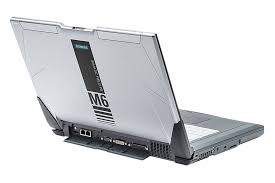
The core functionality of the Field PG M6 is enabling direct communication with industrial hardware. It is uniquely equipped with built-in, galvanically isolated PROFIBUS and dual high-speed PROFINET interfaces . This means you can plug an Ethernet cable directly into the laptop and connect to PLCs, drives, and IO devices without needing extra, fragile adapters or USB converters—a major point of failure eliminated.
Additional legacy ports like serial (RS-232/485) ensure compatibility with older machinery. An integrated SD card reader allows for direct programming of Siemens memory cards. These aren’t “extra features”; they are the essential arteries of industrial connectivity, making the Field PG M6 a true field programmer. Its robust performance and endurance comes from this deep, hardware-level integration with the industrial ecosystem.
Performance Deep Dive: Benchmarks in the Real World
In controlled tests, the Siemens Simatic Field PG M6 reveals its engineering philosophy. In CPU-centric benchmarks like Cinebench, its multi-core scores are consistently strong, demonstrating its ability to handle parallel tasks like simulation engines. Crucially, under sustained load, the power delivery and thermal management systems work to prevent drastic performance drops, maintaining stable clock speeds essential for consistent compile times.
Graphical benchmarks, such as those in SPECviewperf, show solid performance for professional 2D and light 3D visualization tasks inherent in CAD and plant design software. Storage benchmarks confirm the NVMe SSD’s prowess, with sequential read/write speeds that drastically reduce project load times and large file transfers.
The most telling test is a dual stress test . Even under combined CPU and GPU load, the sophisticated cooling system, aided by the thermally efficient magnesium chassis , works to keep core temperatures below critical thresholds (typically under 95°C). Fan noise becomes a purposeful hum rather than a distressed whine, and performance remains stable—a testament to a design built for all-day, heavy lifting rather than short bursts.
The Definitive Tool for the Industrial Professional
The Siemens Simatic Field PG M6 leaves a distinct impression: it is not the flashiest device, but it is arguably one of the most confident and purposeful. Its value isn’t found in a single spec but in the holistic integration of durable hardware, specialized software, and rugged design. The user experience is one of unprecedented reliability and focus in environments that are hostile to standard technology.
It is unequivocally the right tool for:
- Industrial Automation Engineers and System Integrators who spend significant time commissioning and debugging on the factory floor.
- Plant Maintenance and Service Technicians who need a reliable computer for diagnostics, documentation, and parts lookup beside running machinery.
- Heavy Industry and Infrastructure Professionals working in sectors like energy, water treatment, or mining, where environmental toughness is non-negotiable.
If your work takes you into spaces where dust, vibration, and complexity are the norms, the question isn’t whether you need a tool like the Simatic Field PG M6, but how long you can afford to work without one. It represents a strategic investment in reducing downtime, eliminating frustration, and empowering your skill with technology that is truly your equal.