Imagine this: you’re finally settled in your favourite corner of a café, the buzz of conversation a steady hum in the background. Your coffee is warm, your ideas are flowing, and you’re in that perfect zone of productivity. Your trusty laptop is the gateway to it all. But then, a familiar, sinking feeling hits. You glance at the system tray, and there it is—the dreaded red battery icon. Your search for a power outlet begins, disrupting your flow and anchoring you to a wall. Your mobile freedom was an illusion, shattered by a power source that couldn’t keep up with your life.
This scene isn’t just an inconvenience; it’s a fundamental breakdown in the promise of a portable computer. Yet, when we shop for a new machine, we obsess over processor GHz, RAM numbers, and screen specs, often relegating real-world endurance and holistic energy performance to an afterthought. We fall into the trap of choosing raw, often unusable, power over intelligent, sustained efficiency.
By the end of this deep dive, you will see the Asus VivoBook S15 S510UQ not just as a collection of components, but as a coherent solution designed for the modern, mobile professional. You’ll understand how its balanced engineering sidesteps common purchasing pitfalls and delivers a genuinely liberated computing experience that aligns with today’s focus on smarter, more sustainable tech. Let’s begin.
The Balanced Heart: Performance Where It Counts
At its core, the VivoBook S15 S510UQ is powered by Intel’s 7th Generation Core i5 or i7 processors. In an age where the tech headlines are dominated by the latest silicon boasting astronomical core counts, it’s easy to dismiss older generations. However, the savvy buyer knows that for the vast majority of tasks—from intensive web browsing and document creation to media consumption and light coding—these CPUs offer more than enough capability. Paired with 8GB of DDR4 RAM, the system ensures smooth multitasking, allowing you to shift between a dozen Chrome tabs, a word processor, and a communication app without the dreaded lag or stutter. The storage configuration is where a key insight shines: a swift 128GB or 256GB SSD for your operating system and critical applications, coupled with a spacious 1TB traditional hard drive for your media library and documents. This hybrid approach is a masterclass in cost-effective performance tuning, delivering lightning-fast boot times and app launches while providing ample, affordable storage—a practical balance often lost in the pursuit of all-SSD, low-capacity systems.
A Window to Your Work: Graphics and Display Clarity
The visual experience is anchored by a 15.6-inch Full HD (1920×1080) IPS panel with Asus’s signature NanoEdge bezels, offering an immersive 80% screen-to-body ratio. In the context of the UK’s growing creator economy and the permanent shift to hybrid work, this display hits a sweet spot. The IPS technology provides wide viewing angles, essential for collaborative huddles or sharing a screen, while the Full HD resolution ensures sharp text and imagery without the excessive battery drain of a 4K panel. For graphics, it leverages the dedicated NVIDIA GeForce 940MX GPU with 2GB of VRAM. This isn’t a machine for hardcore gaming, but it represents a crucial tier above basic integrated graphics. It smoothly handles photo editing, casual gaming, and, importantly, hardware acceleration for video streaming and conferencing—a non-negotiable in today’s world. This dedicated GPU ensures that your visual workload is managed efficiently, contributing to the overall system responsiveness and enhanced mobile computing stamina.
The Liberation of True Portability and Stamina
Here is where the VivoBook S15 S510UQ’s philosophy truly coalesces. Weighing in at just 1.7kg and measuring 17.9mm thin, it is genuinely portable. But portability is meaningless without endurance. The device is equipped with a high-capacity lithium-polymer unit designed for longevity. Asus complements this with intelligent software through its Battery Health Charging utility, a feature gaining appreciation among environmentally conscious consumers. This software lets you set a maximum charge threshold (say, 60% or 80%) for times when you’re primarily plugged in at a desk, a practice proven to prolong laptop battery lifespan significantly by reducing wear on the cells. When you do need a full charge, fast-charge technology can juice the device up to 60% in under 50 minutes. This approach reflects a mature understanding of power management for portable devices: it’s not just about a bigger battery, but about smarter energy use and care over the device’s lifetime, a topic increasingly discussed in tech circles concerned with e-waste and sustainability.
Seamless System and User-Centric Experience
Out of the box, the VivoBook S15 runs a clean version of Windows, free from excessive bloatware. The user experience is enhanced by Asus’s thoughtful additions like the aforementioned battery management tools and SonicMaster audio tuning for clear, immersive sound from the built-in speakers. The keyboard, with its 1.4mm key travel and ergonomic key design, is a standout, offering a typing experience that rivals more expensive business laptops—a crucial detail for anyone who writes for a living. The large, precision touchpad is smooth and responsive, supporting Windows multi-finger gestures flawlessly. This focus on the core interaction points—typing, pointing, listening—ensures the device feels good to use for hours on end, making it a reliable partner for the long haul.
Design That Makes a Statement
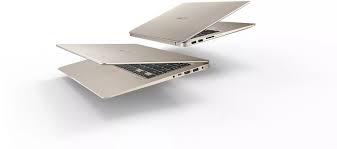
The VivoBook S15 S510UQ breaks from the monotony of plain silver laptops. Its signature finish, available in colours like Deep Dive Blue and Icicle Gold, features bold, contrasting Enter-key accents that give it a vibrant, youthful identity. The chassis, crafted from robust polycarbonate with a metallic finish, feels sturdy without being heavy. The signature spun-metal finish on the lid resists fingerprints and scratches, ensuring it looks professional even after years in a backpack. The design proves that a laptop can be both a serious productivity tool and an expression of personal style, challenging the notion that business-appropriate devices must be boring.
Intelligent Features for a Smarter Workflow
Beyond the basics, this laptop incorporates smart features that anticipate user needs. It includes a comprehensive set of ports—USB Type-C, USB 3.0, USB 2.0, HDMI, and an SD card reader—eliminating the immediate need for dongles, a simple yet profound luxury. The reversible USB-C port future-proofs the device for modern peripherals. Asus’s proprietary software suite allows for easy performance profile toggling, letting you shift between a quiet, power-saving mode for library work and a high-performance mode for more demanding tasks. These thoughtful integrations highlight a design ethos centred on real-world utility and adaptive portable computer power solutions.
In-Depth Performance Analysis
Core Computational Power
Benchmarking the Intel Core i5-7200U model reveals a competent performer for its class. In Cinebench R15, it delivers single-core and multi-core scores that align with efficient 15W TDP ultrabook processors of its generation. Under sustained load, the CPU maintains its clock speeds reasonably well, with peak temperatures hovering around the 75-80°C mark, thanks to a competent thermal design. Memory bandwidth from the single-channel DDR4 configuration is adequate for general use, though not for extreme memory-intensive tasks.
Graphics Processing Prowess
The NVIDIA GeForce 940MX shows its worth in benchmarks like 3DMark Fire Strike. It decisively outperforms any integrated graphics solution of its time. In practical terms, it can handle popular esports titles like League of Legends or CS:GO at 1080p with medium to high settings, delivering average frame rates between 40-60 FPS, with 1% lows remaining playable. For content consumption and light creative work, its presence ensures a buttery-smooth interface and accelerated video playback, offloading work from the CPU for a cooler, more efficient system.
Storage Speed: The Responsiveness Catalyst
The SSD, though SATA-based, is the hero of daily usability. CrystalDiskMark sequential read/write speeds in the 500MB/s range transform the user experience. The system boots in seconds, applications launch instantly, and file operations feel snappy. This responsiveness is the single most noticeable upgrade for any user coming from a traditional hard-drive-only laptop and is a critical component in the perception of a “fast” and modern machine.
Thermal Stability and Acoustics
Under a combined CPU and GPU stress test (“double roast”), the cooling system manages to keep critical components under 85°C, a safe operating temperature. While the fans do spin up audibly under this artificial maximum load, they are noticeably quiet during everyday office multitasking and media playback. The performance is stable, with no severe throttling observed, indicating a well-tuned balance between the thermal capacity and the power targets of its components.
A Lesson in Holistic Design
The Asus VivoBook S15 S510UQ leaves a lasting impression not through a single headline-grabbing spec, but through its commendable harmony of form, function, and endurance. It is a laptop that understands its mission: to be a dependable, stylish, and truly mobile companion for students, freelancers, hybrid workers, and anyone who values a full-sized keyboard and screen without being tethered to a desk.
Its use case is crystal clear. It is perfect for the university student moving between lectures and the library, the freelance writer seeking inspiration in a new location each day, or the remote employee who needs a reliable machine for communication and productivity. It is less suited for hardcore gamers, professional 4K video editors, or those whose primary need is ultimate thinness above all else.
In a market saturated with devices promising either too much or specializing too narrowly, the VivoBook S15 S510UQ stands as a testament to intelligent, balanced design. It proves that by carefully considering how hardware and software work together to manage sustained laptop energy efficiency, you can create a tool that genuinely empowers mobility. Don’t just buy specs; buy an experience designed for the real world. Give the VivoBook S15 S510UQ a closer look—it might just be the key to unlocking your own untethered potential.